
Tag: Amazon UAE

  • Amazon White Friday and Q4 Checklist for UAE Sellers

    Amazon White Friday and Q4 Checklist for UAE Sellers

    The last quarter of the year is the busiest time for Amazon.ae sellers. 11.11, White Friday, the year-end holidays and the Dubai Shopping Festival all fall within a few weeks of each other, and shoppers are ready to spend.

    In 2026, Amazon.ae’s White Friday sale ran from 19 to 30 November, with discounts of up to 60% on selected products across more than 30 categories (Gulf Business). For sellers, events like this can bring a month’s sales in a few days, if the account is ready. This checklist covers how to prepare for Amazon White Friday and Q4, and what to do once the sale is over.

    Why White Friday matters for UAE sellers

    • Shoppers plan purchases around the sale and compare deals carefully.
    • Traffic to Amazon.ae rises sharply during the event.
    • Good sales during peak days can lift your organic ranking afterwards.
    • Gift buying for the holidays and the new year starts right after.

    The flip side is that competition and ad costs also rise. Sellers who prepare early get the benefits; sellers who rush often spend more and sell less.

    Six to eight weeks before: stock and listings

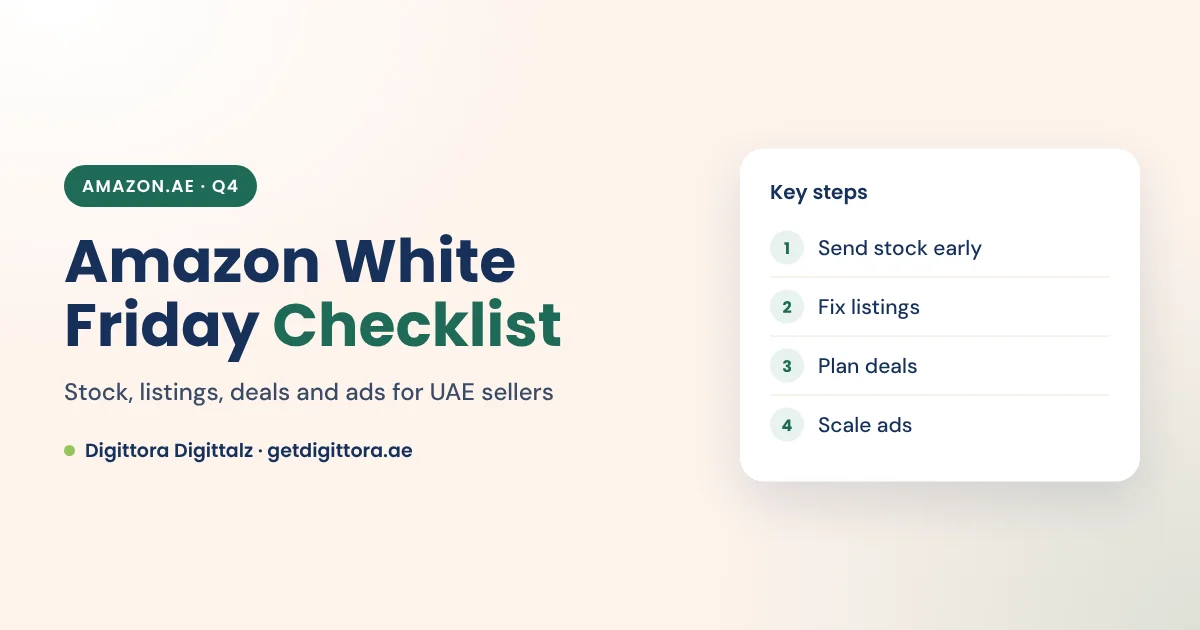
    • Forecast demand: look at last year’s sales and current trends for each product.
    • Send stock early: FBA warehouses get busy before big events, and late stock can miss the sale.
    • Fix listings: titles, images, bullets and A+ Content should be ready before traffic arrives.
    • Check Account Health: clear any warnings or suppressed listings now.

    If a listing is hidden right before the sale, my guide on fixing suppressed Amazon listings explains the usual causes.

    Three to four weeks before: deals and pricing

    • Plan which products will carry deals, coupons or Prime discounts.
    • Check your margins after fees, VAT, ads and discounts.
    • Avoid sudden big price changes that can trigger pricing alerts.
    • Prepare bundles or gift sets for the holiday season.

    One to two weeks before: ads

    Increase budgets on your best campaigns gradually rather than all at once, add seasonal keywords, and make sure your negative keywords are up to date. During the sale, check campaigns daily so budgets do not run out early in the day. My Amazon PPC management service covers this kind of seasonal planning.

    During the sale

    • Watch stock levels every day.
    • Check that deals and coupons are live and showing correctly.
    • Reply quickly to buyer messages.
    • Move ad budget towards products that are converting best.
    • Keep an eye on Account Health, especially late shipments if you ship yourself.

    After White Friday: the rest of Q4

    The sale ending is not the end of the season. Holiday gifting, the new year and the Dubai Shopping Festival, which runs from 4 December 2026 to 17 January 2027 (TradeArabia), keep demand high. Use what you learned during White Friday to adjust stock, prices and ads for the weeks ahead.

    • Restock best-sellers quickly before stock runs out.
    • Review which keywords and products performed best.
    • Plan gift-focused offers for late December.
    • Prepare for returns, which often rise after big sales.

    Amazon.ae and noon: plan for both events

    If you also sell on noon, its Yellow Friday sale runs around the same period. Stock, pricing and customer service across both marketplaces need careful planning so you do not run out on one while holding too much on the other. My Amazon.ae vs noon comparison covers how the two marketplaces differ.

    Common mistakes in Q4

    • Sending stock too late for the sale.
    • Discounting so much that every sale loses money.
    • Running out of budget by midday on peak days.
    • Ignoring suppressed listings or account warnings until the sale starts.
    • Stopping ads immediately after the sale, when demand is still high.

    Amazon White Friday for new sellers

    If your account is new, a big event can still help, but be careful. Without reviews or sales history, heavy discounts may not be enough to win against established sellers, and ads during peak days can be expensive. A better approach is often to use the weeks before the sale to build reviews and data, then run modest deals during the event.

    New sellers should also double-check account health and documents before peak season. An account review or suspension during the busiest weeks can be very costly. My page on what to do if your Amazon account is suspended explains the warning signs.

    Pricing and margins: do the maths first

    Every discount comes straight out of your margin. Before you set a deal price, add up the product cost, shipping to the UAE, customs duty, Amazon referral and FBA fees, 5% VAT on fees, your ad spend and expected returns. If the deal price leaves little or no profit, choose a smaller discount or a different product.

    Bundles and gift sets can be a good alternative to deep discounts. They raise the order value and make your offer stand out without cutting the price of your main product.

    Customer service during peak weeks

    • Reply to buyer messages within 24 hours, ideally faster.
    • Prepare short answers to common questions about delivery, size and returns.
    • Check negative feedback daily and respond professionally.
    • Watch for listing hijackers or unauthorised sellers on your products.

    Good service during peak weeks protects your account health and turns first-time buyers into repeat customers.

    Planning for next year

    After each big event, write down what sold, what ran out, which ads worked and where margins were tight. Next year’s Amazon White Friday preparation then starts from real data instead of guesswork, and you can send stock and plan deals with much more confidence.

    Using coupons, deals and Prime offers

    Amazon offers several ways to discount: coupons, Lightning Deals, Best Deals and Prime exclusive discounts, depending on eligibility. Each has different fees, rules and visibility. Coupons are simple and show a badge in search results. Deals usually get more visibility but need to be planned and submitted in advance.

    Choose the deal type that fits your margins and stock. A coupon on a high-margin product can work well, while a short deal can help clear seasonal stock. Always check the deal is live and showing correctly once the sale begins.

    Stock planning for the whole season

    Running out of stock during a busy period can hurt for weeks, because your listing loses sales history and ranking while competitors take your place. Plan stock for the whole of Q4, not just the sale days. That includes White Friday, the holiday weeks and the Dubai Shopping Festival period that follows.

    Frequently asked questions

    When is Amazon White Friday in the UAE?

    In 2026, Amazon.ae’s White Friday ran from 19 to 30 November. Dates change each year, so check Amazon’s announcements and Seller Central for upcoming events.

    How early should I send stock to Amazon for White Friday?

    Several weeks before the sale. Warehouses get busy before big events, and late stock may not be available when traffic peaks.

    Should I increase my Amazon ads budget during White Friday?

    Usually yes, on your best-performing campaigns, but increase it step by step and watch results daily rather than doubling everything at once.

    Do White Friday sales help organic ranking?

    Strong sales during a big event can help your products rank better afterwards, as Amazon sees them as popular and relevant.

    What should I do after White Friday ends?

    Restock quickly, review what worked, and plan for holiday gifting and the Dubai Shopping Festival, when demand stays high.

    Want your account ready for the next big sale?

    Send me your store or product links. I will tell you what to fix and prepare before the next sale event.
    Sources

  • Amazon.ae vs noon in 2026: Which Marketplace Should UAE Sellers Choose?

    Amazon.ae vs noon in 2026: Which Marketplace Should UAE Sellers Choose?

    If you want to sell online in the UAE, two names come up first: Amazon.ae and noon. Both are busy, both deliver fast across the Emirates, and both want your products. But they work differently, they charge differently, and they suit different kinds of sellers.

    I manage Amazon accounts for sellers in the UAE, and “Amazon or noon?” is one of the first questions new clients ask me. This Amazon vs noon guide gives you a clear side-by-side view so you can see which one fits your products, and when it makes sense to sell on both.

    Amazon.ae and noon at a glance

    Amazon.ae is the UAE store of Amazon, with Amazon’s seller tools, advertising and Prime delivery. noon is a homegrown marketplace that started in the region and has a strong local following, especially for fashion, beauty, electronics and daily essentials.

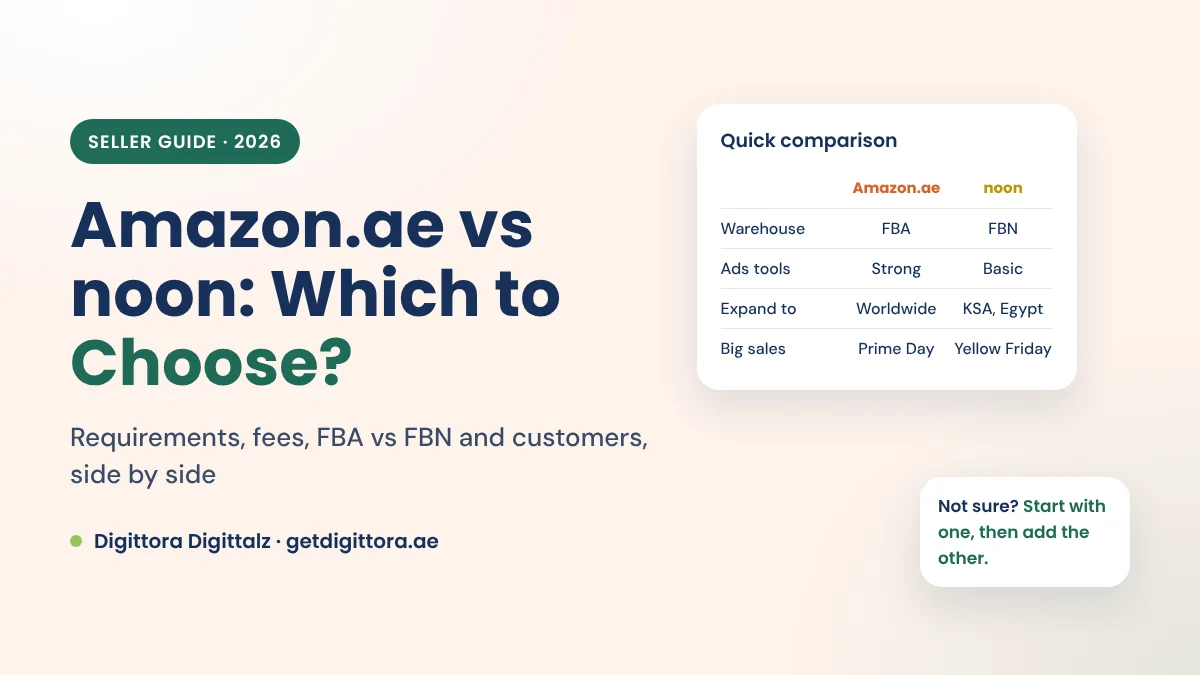
    Amazon.aenoon
    RootsGlobal company, UAE storeRegional, built for the Gulf
    Who you need to beA UAE-licensed business (sellers abroad can also join through Amazon Global Selling)A business registered in the UAE, Saudi Arabia or Egypt
    Commission (referral fee)Varies by category, a percentage of the sale priceVaries by category, from about 4% to 27%
    Warehouse optionFulfilment by Amazon (FBA)Fulfilled by noon (FBN)
    AdvertisingSponsored Products, Sponsored Brands and morenoon ads, a smaller ad system
    ExpansionSaudi Arabia and other Amazon stores worldwideSaudi Arabia and Egypt

    Figures come from Amazon’s Global Selling page, noon’s Partner help centre and a 2026 guide by Meydan Free Zone. Fees change often, so always confirm the current rate for your category before you set prices.

    What you need to sell on either marketplace

    The basic requirements are similar. In most cases you need a UAE trade licence that covers the products you sell, a business bank account in the company’s name, your Emirates ID and passport, and a VAT certificate if you are registered (Business Dubai). Some product types, such as cosmetics, food, supplements and children’s items, also need approvals before either marketplace will list them.

    If you are still at this stage, my guide on how to sell on Amazon UAE explains the steps in order.

    Fees: which one costs more?

    Neither marketplace is simply “cheaper”. It depends on your category, your product size and how you ship. Both charge a commission on each sale, and both charge for storage and delivery if you use their warehouses.

    • noon lists commissions from about 4% up to 27% depending on the category. For example, noon’s help centre shows apparel at 27% of the sale price, and FBN delivery for a standard parcel of 0.5 to 1 kg at AED 10.50 per unit for items over AED 25 (noon Partners).
    • Amazon.ae also charges a referral fee by category, plus FBA fees by size and weight if Amazon stores and ships for you. Amazon is currently offering new UAE sellers incentives such as an ad credit for Sponsored Products (Amazon Global Selling).

    The real number that matters is what you keep after commission, delivery, storage, returns, ads and 5% VAT on fees. Two products in the same category can have very different margins on each marketplace. This is the first thing I calculate for a new client, because guessing here is the fastest way to lose money.

    Shipping: FBA vs FBN

    Both marketplaces let you send stock to their warehouses so they can pack and deliver for you. Amazon calls this FBA. noon calls it FBN. Both also let you ship orders yourself.

    • Warehouse shipping (FBA or FBN) gives you fast delivery badges and less daily work, but you pay storage fees, and slow-selling stock gets expensive over time.
    • Shipping yourself keeps storage costs low and works for bulky or slow items, but you handle packing, couriers and returns.

    Many sellers use warehouse shipping for their best sellers and ship the rest themselves. Getting this mix right has a big effect on profit.

    Customers and competition

    Amazon says over 46% of the UAE population bought online in 2024, with an average spend of about USD 1,590 per customer (Amazon Global Selling). Both marketplaces share this audience, but buyers behave a little differently.

    • Amazon.ae buyers often compare reviews, ratings and Prime delivery closely. Strong listings and ads matter a lot.
    • noon buyers respond well to price, sales events and local promotions such as Yellow Friday and Ramadan offers.

    Competition depends on your category. Some categories are crowded on Amazon and quieter on noon, and the reverse is also true. Checking the top sellers for your product on both marketplaces before you start tells you a lot.

    Amazon vs noon: which one should you choose?

    Here is a simple way to think about it.

    • Start with Amazon.ae if you have your own brand, want to run ads, care about reviews, or plan to expand to Saudi Arabia or other Amazon stores later.
    • Start with noon if you sell price-sensitive everyday products, fashion or electronics, and want to join big local sales events.
    • Sell on both once one marketplace is running smoothly. Many UAE sellers do this, but running two stores doubles the listings, stock planning and customer messages to manage.

    My honest advice is to master one marketplace first. Splitting your time and stock across two stores too early is one of the most common reasons new sellers struggle.

    Questions to answer before you decide

    Before you register anywhere, it helps to answer a few honest questions about your business. Your answers usually point clearly to one marketplace.

    • Do you own a brand or a trademark? Brand owners get extra protection and content tools on Amazon.
    • How much can you spend on ads each month? Some categories need steady ad spend from day one to get seen.
    • How big and heavy are your products? Size changes warehouse and delivery fees a lot on both marketplaces.
    • How fast does your stock sell? Slow sellers can build up storage fees in a warehouse.
    • Do you want to sell outside the UAE later? Amazon opens doors to many countries; noon focuses on the Gulf and Egypt.
    • Who will handle listings, stock and messages every day? A store that is left alone for weeks quickly drops in search.

    If you are unsure about two or more of these, it is worth getting a second opinion before you spend on stock and fees.

    Common mistakes new UAE sellers make

    • Choosing a marketplace before checking real margins for their category.
    • Copying the same listing from one marketplace to the other without changing it.
    • Sending too much stock to a warehouse and paying storage fees on slow sellers.
    • Starting ads before the listing, images and reviews are ready.
    • Ignoring account health warnings until the account is at risk.

    Each of these can cost thousands of dirhams in the first few months, and most can be avoided with the right setup.

    How I can help

    I help UAE sellers set up and run their Amazon stores: account registration, listings that convert, stock planning and Amazon ads. If you are not sure which marketplace suits you, I will look at your products and tell you honestly. See my Amazon seller account and management services, my Amazon PPC and listing optimization page, and prices on my pricing page.

    Frequently asked questions

    Is it better to sell on Amazon or noon in the UAE?

    It depends on your products. Amazon.ae suits branded products, sellers who want to run ads and those planning to expand to other Amazon stores. noon suits price-driven everyday products and sellers who want to join local sales events. Many sellers end up on both.

    Can I sell on Amazon.ae and noon at the same time?

    Yes. Many UAE sellers list on both. It works best once one store is running well, because two stores mean more listings, stock and customer messages to manage.

    Do I need a trade licence to sell on noon or Amazon UAE?

    In most cases, yes. You need a UAE trade licence that covers your products, plus a business bank account and your ID documents. Some product types also need extra approvals.

    Which marketplace has lower fees?

    Neither is always cheaper. Commissions vary by category on both, and warehouse fees depend on size and weight. Compare the full cost for your specific product, including ads and returns.

    Can noon sellers also sell in Saudi Arabia?

    Yes. noon operates in the UAE, Saudi Arabia and Egypt. Amazon also has a Saudi store, Amazon.sa, which you can add from Seller Central.

    Not sure where to start?

    Tell me what you sell and where you buy your stock. I will reply on WhatsApp with which marketplace I would start with, and why.

    Sources

  • How to Sell on Amazon UAE: A Step-by-Step Guide for 2026

    How to Sell on Amazon UAE: A Step-by-Step Guide for 2026

    Selling on Amazon.ae is one of the quickest ways to reach shoppers across the Emirates. You don’t need a shop, a warehouse or a big team to get started. You do need the right documents, a clear view of your costs, and product pages that buyers trust.

    I’m Syeda Maleeha, a freelance Amazon account manager based in Ajman. This guide shows you how to sell on Amazon UAE step by step, from your trade licence to your first order. It uses Amazon’s own figures and the questions new sellers ask most often on forums and in my WhatsApp chats.

    Why sell on Amazon.ae?

    Amazon took over Souq.com and launched Amazon.ae in May 2019 (Gulf News). Since then, online shopping in the country has grown fast. The UAE e-commerce market reached AED 42.2 billion in 2025, based on Euromonitor data shared by Dubai South.

    Amazon takes care of payments and customer trust, and it can also handle storage and delivery for you. That means a small brand from Sharjah can appear on the same search page as a global name. The trade-off is that fees cut into your margin, popular categories are crowded, and Amazon’s rules are strict. Knowing this before you start will save you money.

    What you need before you register

    Amazon’s UAE sign-up and the free zones that partner with Amazon list the same core items (Khaleej Times, Blooprint):

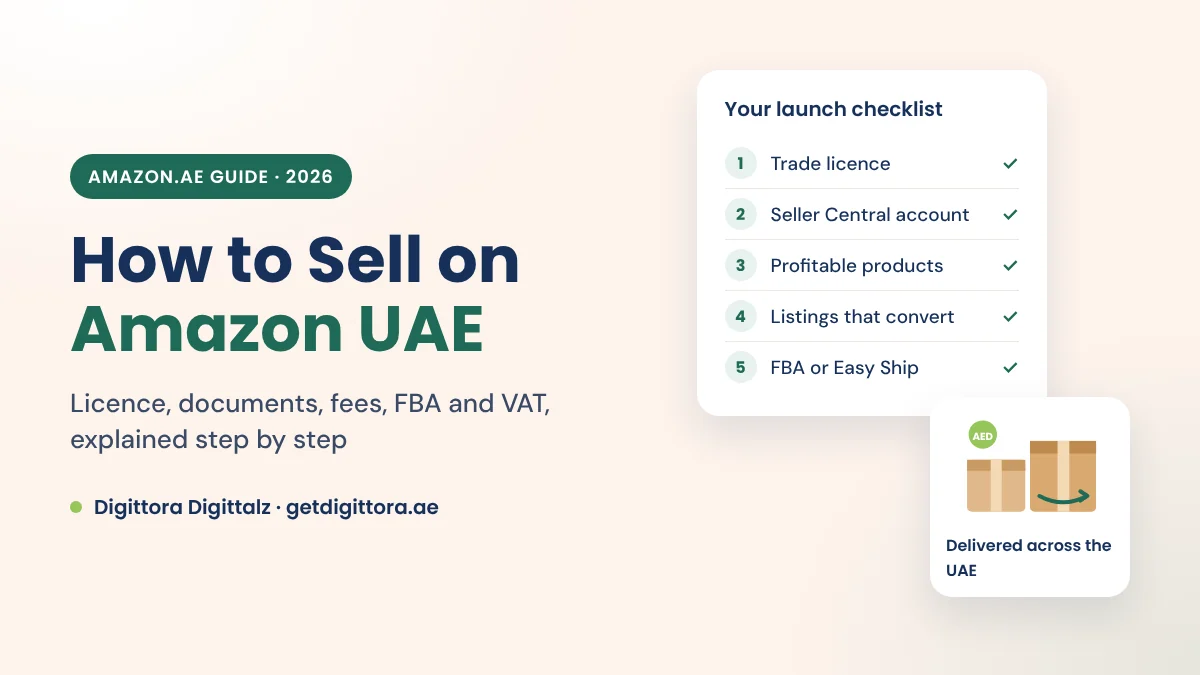
    • A valid trade licence (e-commerce or general trading), or a power of attorney if you sign up for a company you represent
    • Your Emirates ID, or passport details for non-residents
    • A credit card that Amazon can charge
    • A bank account to receive your sales money
    • A phone number and an email address you check often
    • Your VAT registration number, if you are registered

    The question I hear most is, “Can I sell without a trade licence?” If you live in the UAE, plan on getting one. Amazon’s UAE sign-up asks for it, and its partner free zones exist to help sellers get licensed. Sellers based outside the UAE can often sell through Amazon Global Selling using their home-country business instead.

    Which licence should you choose?

    Licence typeTypical cost (2026 estimates)Best for
    Free zone e-commerce licenceFrom about AED 5,500 to 10,000 a yearMost new Amazon sellers
    Mainland licenceAbout AED 12,000 to 18,000Sellers who also want a shop or local B2B sales
    e-Trader licence (Dubai)About AED 1,070 to 1,500Home-based sellers (only certain nationalities and activities)

    These ranges come from SPC Free Zone and published free zone price lists, such as RAKEZ at AED 5,499. Prices change and depend on visas and business activities, so always confirm with the free zone before you pay.

    Step 1: Choose your selling plan

    Amazon.ae has two plans:

    • Individual: for sellers who expect to sell fewer than 40 items a month.
    • Professional: for more than 40 items a month. It adds advertising, bulk listing tools and business reports. Amazon says Professional accounts are currently available with no monthly subscription fee, for a limited time.

    My advice is to pick Professional if you plan to run Amazon ads or sell more than a few products. Sponsored Products ads are only available on the Professional plan, and most products need some ad support in the first few months.

    Step 2: Register on Seller Central

    Go to sell.amazon.ae and click Sign up. You’ll log in with an Amazon account (or create one), then enter your business details, upload your documents and add your card and bank details. Amazon may also ask for a short video call to check your ID.

    Sellers usually report approval in 2 to 5 working days (SPC Free Zone). The most common cause of delays is details that don’t match. The name and address on your trade licence, bank statement and Emirates ID should be the same, letter for letter. If you’d like someone to handle this part, my Amazon seller account setup service covers the documents, verification and first listings.

    Step 3: Pick products that can make a profit

    Do the maths before you order stock. Your selling price has to cover the product cost, shipping to the UAE, customs duty (usually 5% on imported goods), Amazon’s fees, VAT and your ad budget, and still leave a profit.

    • Use the FBA Revenue Calculator inside Seller Central to estimate fees for each product.
    • Check search demand and competition with tools like Helium 10 or Jungle Scout.
    • Look at the top 10 sellers for your main search term. If they all have thousands of reviews, a new listing will struggle.
    • Small, light products usually have lower fulfilment fees and cheaper shipping.
    • Some categories need Amazon’s approval before you can list, so check this in Seller Central first.

    Step 4: Create listings that sell

    A good listing answers a buyer’s questions before they ask. Here’s what to get right:

    • Title: brand, product name, the main feature and size or quantity. Keep it readable, not stuffed with search terms.
    • Bullet points: five short points on benefits, materials, sizes and what’s in the box.
    • Images: the main image must have a pure white background. Add lifestyle photos, size charts and close-ups.
    • Backend search terms: extra words buyers use, including spelling variations, that don’t fit in the title.
    • Arabic content: Amazon.ae also shows listings in Arabic. A clean Arabic translation reaches more local shoppers.

    If you own a registered trademark, enrol in Amazon Brand Registry. It protects your brand from copycats and gives you access to A+ Content, the extra images and comparison charts below the bullet points.

    Amazon A+ Content designed for bamboo drawer dividers
    An example of A+ Content I designed for a home organisation brand.

    Listing work and ads go hand in hand, which is why I cover both on my Amazon PPC and listing optimization page.

    Step 5: Choose how you’ll ship orders

    OptionHow it worksCost starts from
    Fulfilment by Amazon (FBA)You send stock to Amazon. Amazon stores, packs, delivers and handles returns.AED 7.5 per unit, by size
    Easy ShipYou store and pack. Amazon collects the parcel and delivers it.AED 14 per shipment
    Self-ShipYou store, pack and deliver with your own courier.Your own courier rates

    Fee figures are from Amazon.ae’s pricing page as quoted by Blooprint, and Amazon adds VAT on top. FBA products can show the Prime badge, which helps sales. Easy Ship or Self-Ship can work better for bulky or slow-selling items, where storage fees add up.

    Step 6: Understand the fees

    • Referral fee: mostly 4.5% to 15% of the selling price, with a minimum of AED 1, depending on the category.
    • Fulfilment fees: FBA or Easy Ship fees as above, plus monthly storage fees for stock in Amazon’s warehouse.
    • Subscription: currently no monthly fee on the Professional plan, as a limited-time offer.
    • Advertising: you set your own daily budget.
    • VAT: Amazon charges 5% VAT on its fees.

    Here’s a simple example. Say you sell a product for AED 100. A 10% referral fee is AED 10. If the FBA fee is AED 12, your product and shipping cost AED 40 and you spend AED 10 on ads, you keep about AED 28 before tax. Real fees depend on your category and product size, so always run your own numbers.

    Step 7: VAT and corporate tax basics

    VAT registration is mandatory once your taxable sales pass AED 375,000 in 12 months, and you can register by choice from AED 187,500 (Federal Tax Authority). UAE corporate tax is 9% on taxable profit above AED 375,000, and some free zone income can qualify for 0% (WAM). Tax rules depend on your setup, so speak to a registered tax agent before you scale.

    Step 8: Launch and keep your account healthy

    • Start Sponsored Products ads on launch day so Amazon learns which searches convert.
    • Track ACOS (ad spend divided by ad sales) and TACOS (ad spend divided by total sales) every week.
    • Never pay for reviews or swap free products for reviews. Amazon bans this and can suspend your account.
    • Keep your Order Defect Rate under 1%, as Amazon expects.
    • Watch your stock levels. Running out of stock can push your listing down the search results.

    Amazon.ae or noon?

    Many UAE sellers list on both. noon is a UAE-based marketplace with a strong local following, while Amazon.ae gives you Amazon’s tools, Prime delivery and the option to expand to Saudi Arabia and other Amazon stores later. If you have limited stock or time, start with one, learn how it works, then add the second. I compare both in more detail in Amazon.ae vs noon: which marketplace to choose.

    Common mistakes new sellers make

    1. Ordering a large batch of stock before testing demand
    2. Forgetting customs duty, VAT and storage fees in the price
    3. Using supplier photos that look like every other listing
    4. Uploading documents with names or addresses that don’t match
    5. Ignoring Account Health warnings until the account is at risk

    Should you do it yourself or get help?

    You can set up and run an account on your own if you have the time to learn Seller Central. Many business owners would rather spend that time on sourcing and sales. My Amazon account setup starts from AED 750, and monthly account management starts from AED 1,200. You can see every package on my pricing page, or read more about how I work on the homepage.

    Frequently asked questions

    Can I sell on Amazon UAE without a trade licence?

    If you are based in the UAE, Amazon’s sign-up asks for a trade licence or a power of attorney for the business. A free zone e-commerce licence is the most common choice. Sellers outside the UAE can often use Amazon Global Selling with their home-country company.

    How much does it cost to start selling on Amazon.ae?

    Plan for a trade licence (from about AED 5,500 a year in many free zones), your first stock, and Amazon’s fees. Referral fees are mostly 4.5% to 15%, FBA starts from AED 7.5 per unit, and the Professional plan currently has no monthly fee for a limited time.

    How long does Amazon UAE seller approval take?

    Sellers usually report 2 to 5 working days once all documents are in. It can take longer if Amazon asks for a video call or extra checks, so make sure your licence, ID and bank details all match.

    Is selling on Amazon UAE profitable?

    It can be, if you choose products with real demand and price them after counting every cost. Many new sellers lose money because they forget fees, customs duty or ad costs. Run the numbers in the FBA Revenue Calculator before you buy stock.

    Do I need to register for VAT to sell on Amazon UAE?

    VAT registration is mandatory once your taxable sales pass AED 375,000 in 12 months. You can register by choice from AED 187,500. Amazon also charges 5% VAT on its own fees.

    Can I sell on Amazon.ae from outside the UAE?

    Yes, in many cases. Amazon Global Selling lets businesses from countries such as India and China sell to UAE shoppers, usually using FBA so Amazon handles local delivery.

    What is the difference between FBA and Easy Ship?

    With FBA, Amazon stores your stock and handles packing, delivery and returns. With Easy Ship, you keep the stock and pack each order, and Amazon collects and delivers it.

    Related reading

    Thinking about Google as well as Amazon? Read what SEO costs in Dubai or see my SEO services.

    Sources